Molly Holt (president of Holt Children’s Services Korea)
Two connections I failed to make in the documentary (gah! so close…media attention will be over long before I ever even come close to mastering being fully present for it):
13 years after the war, the reason I was abandoned was BECAUSE adoption agencies had set themselves up as the only solution for difficult family situations. And NOT just standing by at the ready, but actively canvassing for children. It was a propaganda wave and a system set up to pipeline children straight to the airport. That’s just chilling in my book.
Adoption agencies say they MUST be here or catastrophic conclusions will become realities. When in actuality, their presence retards the implementation of adequate social programming.
One question everyone should ask themselves is: Why are the adoption agencies against laws to improve social programming and protecting the civil rights of children?Shouldn’t it be the goal of every adoption program on the planet, especially a Christian organization, to no longer be needed? Who do they care the most about? Hmm?
And something everyone should consider is: When you choose to ignore questionable ethics and continue to participate out of self interest, then your own ethics are also questionable. And nearly every adoptee I’ve spoken with, even the ones that had great experiences, you can tell. You can tell how they came to become family does not feel good to them.
So why aren’t we all working together to clean the mess up? I’ll tell you why:
On my walk home from school today I saw two African American women talking and (I could kick myself) I didn’t stop to introduce myself because all I could think about was stripping in front of my air conditioner. (Did I mention I could kick myself?) Three days ago, as I was getting into a taxi to catch a train I was in danger of missing to Seoul I saw a Caucasian man ride past me on a bicycle and stop, and it was all I could do to say, “screw Seoul” and not get out of the car and introduce myself. And then I saw another and another and another. Four foreigners! But I had to get in the taxi.
There are five other foreigners in this this town of 14,000 that I know of. A black S. African couple and their preschool age daughter, and their neighbor who is Africaner. The couple didn’t have a phone yet, and I’ve not seen them since. The white woman, I got her phone number and texted her and never heard back. Then, I ran into her one time and she informed me she was leaving. In the building next to me are two American men. One N. Carolina man in his late twenties that I spoke with one time, who really didn’t seem interested in talking to a Korean American who could speak English, and the other an older guy who is what my gyopo friend refers to as a “LBH,” (Loser Back Home) who I have never met but seen. I saw him go into the lottery office to buy tickets one time, and I saw him another time chatting up some girls and my yellow fever alarms were going off. I admit I am probably judging him harshly and superficially, but have had no desire to run up to talk to him either.
Once home I turned on the air, poured myself a Pepsi on ice, and had a smoke on the veranda. (this is hardly a veranda in the southern sense. It’s just a space between sliding glass doors big enough to hold the washing machine and a half height window) It was a monsoon downpour most of the day, so the humidity is so high that my bathroom floor is still wet from this morning’s shower, 9 hours previous.
Anyway, it is one of those surreal things to be so excited to see a westerner, be they black or white. It’s just exciting to see someone you instantly know you can communicate with. It’s indescribable. The hope and elation and then disappointment. Hey! I am one of you! And then not be recognized as one. Or be rejected.
In contrast was today’s lunch, which is typical of Korean hospitality. The entire office ordered Chinese take-out and at the last minute remembered me and came to add me to their order. Then, they wouldn’t let me contribute, and they none of them understand how uncomfortable that is and that I can’t ever reciprocate because I don’t know how to order take-out without their help, so any attempt to reciprocate would be hijacked by someone else. (I do bring fruit or share pastries, etc. occasionally) So the food comes and we all sit around the table and they all chat and tell funny stories to each other and there’s nothing I can do but eat in silence and wait in pain for the stories I can’t understand to finish. And then they came by later with coffee. And then ice cream. And then melon. And then someone asked me if I was working tomorrow. Yes all week. So I am sure they are figuring out how to divvy up the burden of buying me lunch all week. I should be happy that they remember I exist. But do I really? If no one talks to you, do you really exist? And so I study their hand gestures, or note the way each of them slurps their noodles differently, or note how Chinese food doesn’t result in a tooth-brushing frenzy like Korean food does with its teeth decorating pepper flakes. And tomorrow I expect to sit through the same ordeal of included in presence only. They usually remember to come remind me when it’s time to eat, or that it’s time to stop working and go home. It’s like watching somebody else’s pet.
I must say, I had a really lovely day today on my own. I decided to make my lessons revolve around a road trip through America, and I’ve had a delightful day finding videos of unique cultures and dialects along the way. I have no idea how to turn this into speaking lessons for the kids and totally recognize that it is more for me than them. And I listen lovingly to the Appalachian voices of the neighbors of my youth and remember the velvet Elvis’s adorning their walls and hear the added li’l darlings and huns and sirs and m’ams. And I know that if I watched two movies back to back, I could once again replicate that accent, it’s so familiar to me. And I try to ignore the dream I once had of living there which was never separate from the nightmare of possibly waking up to the KKK smashing through the windows in the middle of the night. And then I run across an ad. about voice profiling discrimination and start collecting samples of Teena Marie and Eminem and how that can work in reverse. So tonight I’ll be teaching myself how to subtitle in English over some of the Creole and Texan drawl and Appalachian and Gulluh I’ve found. Tomorrow I’ll look for New England and Minnesotan and N.W. creaky voice and California valley girl, Bostonian and Midlands. Another day I’m going to explore the real cowboys, black and white, just west of the Mississippi, and the real Indians. Another day will be roadside attractions. And then there are the landforms and the music that sprung up in those environments. And I don’t really have enough time to show the kids this America that I love so much. And miss so much. And I know they won’t really care. Because learning about my culture doesn’t affect their lives.
One time, the first week of school, I had open Q&A time and one boy asked, “Is it true everything is wonderful in America?” And I started to explain that many things were f’d up but that with every disruption we learned something new, and that positive changes happen quickly because unlike in Korea we are totally free to criticize everything all the time and…At that point I was censored by the co-teacher and told that I was about to offend the students and that I shouldn’t continue.
As Willie always said, “Oh Korea…”
And what does an adoptee know, anyway. It’s easy for them – they’ve lived privileged and pampered lives and have perfect English.
Ha! During my interview with the university students they were surprisingly poker-faced about anything I had to say, but I saw eyebrows raise when part of my answer to, “what was it like growing up in America” began that I was spoiled and had everything material a person could want. “yup. uh huh. thought so.” I could read across their faces. My parents lived on a serious budget with four kids on a teacher’s salary, but I’m happy to let Koreans see that their superficial perceptions of the lives of adoptees is true. And then I went on to describe just how meaningless that is…
It’s not like a communist country, where a Chinese equivalent to Howard Zinn would be in jail or anything like that. (His history of America in cartoon form is available in Korean, btw) And there are tons of Korean critics of Korea. But Koreans don’t have any faith that anything can really change, or that they have any power except through body bag count, and most are too comfortable to get to that point. And it’s also a pretty united front to not criticize Korea on the world stage. So status quo takes on a larger than life presence in Korea. And it is Korea’s world image which seems to be the one thing that gets things moving here. So when the world begins to criticize Korea, then Korea will change. And the world is only worried about nuclear fallout in the game of chicken between two feuding brothers.
Please world, start criticizing Korea for its lack of compassion towards its own people. For its antiquated moralizing and penalizing of women. For its spending money on flights to the moon and not on social programs.
Oh my God I’m talking about adoption again. OK. I DO NOT WANT to become one of those. I want to stop it. I know that’s practically impossible here, since it’s a virtual mine field of adoption-related issues every foot in all directions, but I have to try. I can say, though, that there’s been enough repetition of my story since I’ve been here that I am bored with it and that’s a good thing. I can also say that when I talk about adoption it consumes less of me. I still think Holt needs to be held accountable for their UN Christian and inhumane acts against moms and adoptees. But personally, I am not defined by these crimes that were committed against me. So that’s a new and wonderful turn of events. So I’ll no doubt continue to observe and comment, but the nature of how I’m feeling/viewing it has changed: I don’t think this thing can hurt me anymore.
Last year I had a Caucasian English teacher friend who was married to a Korean man and had two children, and we’ve fallen off from writing each other. She was going through a rough spot at the time and was feeling really oppressed by this place. And I was here in the height of culture shock and she kind of eased my transition a little. And I didn’t really understand what she was talking about, because I was trying so hard to be open and positive. And then I found that Youtube video, made by another English teacher, entitled, “hate this place,” and wrote about how life under Y’s thumb was like.
It comes and it goes, that feeling. But lately it’s been building up again to a cacophonous drone, like those cicadas outside my window. Some days I really like the sound, especially when there are the sounds of other birds and animals to mitigate it, as nature is noisy. But on these really hot still days like today, it’s like an electric arc ready to fry your brain. And it can make a person go crazy, like Chinese water torture.
Looming over my head is entering in Korean translations into the new website I’ve made of every Korean and French article ever written for and about TRACK, as well as hand entering in every menu item in Korean and French, and carefully adding programs to make the site more functional. I work until my laptop is too hot and making weird noises, and then I go have a smoke, have a drink or bite to eat, and continue. Or I cat nap and begin again a few minutes later. Until day and night have no meaning. Still incomplete are reducing the pixel size of all the photos of the art installation and uploading them. I must also figure out how to make WordPress accept Korean hangeul characters. And track down someone to finish the translation on my speech in Korean so that we can then send out a proper press release in Korean. And then there are the letters to Kim Sook Ja and now the translations to get to the intangible cultural property. This is my vacation. I start work tomorrow.
I sometimes flip through the channels in hopes of finding something interesting, but the typical fare is always slapstick comedy with electronic game sound effects and laugh tracks, or poorly practiced choreography of half naked girls behind aging pop stars whose voices are shot, or infomercials and game shows. Even the On Style channel has syndicated t.v. shows that shouldn’t be purchased by any country, and home-grown fare like, “Fashion of Cry” (wtf?) which is some strange half fashion commentary/comedy challenge, and yes, with laugh track and animated enhancements and sound effects. I discovered music channels, though, and there’s a world music channel keeping me company.
I have decided that Japanese people have thin lips. Or maybe it’s just that Koreans have full lips. I have also decided that I don’t hate air conditioning and I am afraid of what my bill will look like next month. Turning it on and off is about the only exercise I get, as I have to climb a stool and I can only stand about ten minutes of it at a time. I am frustrated that friends don’t listen and you can’t tell them that because then you have issues – oh, too late – and I don’t understand how the stupidest people on the planet become interviewers and that it’s not okay to complain about them. I have also decided I can’t buy vegetables because there’s only one of me and they go rotten, and so I live only on meat and starch, cereal and milk, during school break. I can’t find beef anywhere so eat pork or chicken. And I eat tenderloin because Koreans would rather pay 8 bucks for fatty bacon and ignore the tenderloin, so I can get it for 4 bucks. I have rearranged my room in the only other configuration possible, and it only took about a half hour.
I feel like how you feel when you’ve slept in too long, or been sitting in one spot for too long, or been carrying something too long. For a year. I feel – Korean word here – burdened. Every time I turn my neck, it’s like cracking all my knuckles…
Next week is “the Gathering” of 500 adoptees in Seoul from all over the world. I will not be one of them. I’ve absolutely no desire to be there. I do not want to attend seminars about literature and art about adoption. Or talk about adoption politics. Or JESUS, for the love of God, I don’t want to talk about adoptee healing. And I don’t want to go slamming soju all over Seoul and leaving street pizza on the ground with them either. And it isn’t just the gathering. Adopted kids these days – they’re surrounded with being pathologized from the moment they arrive: ( get out the barf bag) by their own parents.
Healing is not gathering in a circle and burning your hate or sending off your wishes in a paper boat or chanting while burning incense or dancing ’til foaming at the mouth. Healing >might< be this: (a recent contribution to my adopted-abused website) But it’s going beyond that. I’ll tell you about healing. Healing is knowing when to look up from all of this nausea and saying, I want a life, screw this. I’m so very very thankful I had my awakening and spent the last two years exploring. I’m so very very thankful I don’t live here permanently: Korea or adoption land. I’m really ready to move on. To a world where all things are not in reference to adoption. I think I’ll be leaving TRACK soon. I don’t want to be a career adoptee.
But you know what is really healing? Laughing, God damn it. (the irony of that last sentence doesn’t escape me) Laughing. And lying in the grass looking up at the sky holding hands with someone. I need to find friends who can listen and be there for me and who can put the toil aside a minute and have a laugh.
As far as why Koreans are not interested in African dance or culture, well, the answer is because they are poor. I won’t go into details in an open forum because I might be misunderstood as racist.
I’ll bite. And I’ve been called a racist several times here in Korea
…amazing…
I believe the reasons why Koreans are not interested in African dance or culture is because Koreans are new money. Like new money the world over, they are not secure in their status and have to surround themselves with things that validate their imagined or desired status in society.
For example, do Koreans really love European classical music so much, or do a disproportionate amount of children go to music academies learning violin and piano because they are status symbols for their parents?
Not only new money, but not worldly. And happy to stay that way. Travel is a new status symbol in and of itself and a huge amount of Koreans travel abroad on holiday. But how much real culture do they experience in their tour groups? How much interaction with the local populations do they have? They will marginalize the foreigner’s culture shock, and yet they are totally unwilling to place themselves in a similar situation and avoid any mind-expanding discomfort. And when they do live abroad, they are notorious for not bothering to learn about where they are, as their intent is only to stay long enough to pad their status upon return to Korea.
It’s really too bad. Because this nouveau-riche snobbery robs them of the opportunity to grow as people and understand the rest of the world WHO THEY SEEK TO TRADE WITH. So they really shoot themselves in the foot by doing so. And if they looked at the world in more than a superficial way, they’d realize that Africa is not the country of poor mud huts and bare feet, but an incredibly diverse and rich culture equal to their own.
In fact, the whole world has rich cultures equal to Korea’s. So maybe that’s what they’re afraid of; what they don’t want to recognize. Because when you’ve spent your whole history in subjugation, and continue the self-subjugation today, nationalism is sometimes your only comfort.
It’s not about racism, to my mind. It’s about this damned Confucian legacy. Everyone wants to be the high ranking civil servant even when that role is obsolete. In the absence of a Confucian government, the people will recreate the Confucian model in hopes that they can finally get a chance to master it. What will it take to resolve this mass frustration??? Clearly, communism didn’t work for our brothers & sisters to the north. And clearly, capitalism enslaves just as much as Confuscianism.
I guess this is a problem the world over: just extreme here. But to my mind, if everyone just stopped and surveyed and said, “I have enough. My needs are met. The consumer is finished.” But Korea is in a shopping frenzy, in a mad race to impress each other.
Most older Koreans I have spoken with all bemoan that the changes have come too fast, and that the people just can’t adjust that quickly. Many younger Koreans think Korea is not changing fast enough. I think they’re both right.
But damn, you’d think some self confidence would kick in soon. At least that’s what I hope for. I hope Koreans can concentrate on being happy more and choose life! over this ancient and spiritually bankrupt quest for social status.
And in that world, grandmas will not force their daughters to throw away babies because their daughter’s happiness means more to them than what the Parks will think…
The past few days have been really exhausting. It’s always exhausting going to Seoul with toiletries, change of clothes, umbrella, homework, and my ten ton laptop in tow. This trip was especially packed.
First, I met two European adoptees and we headed out to the fairly new Emigration Museum in Incheon, which was the departure point for the first Koreans to leave Korea and head outside of the hermit kingdom to work in the sugar cane fields of Hawaii, just after the turn of the century. (not including “Chosun man” which Rembrandt painted) It seems we will be included in future exhibits and my mission was to discuss display of the art exhibit there.
Here’s an interactive on-line history of Korean immigration to America which is pretty interesting:
Click on the photo for a link to the website
The history of the Korean diaspora is pretty interesting, especially how many countries Koreans are living in. The Mexican immigration seemed especially brutal. And somehow, they ended up in S. America and Australia and Russia and…there’s even 5 in Iceland. Right now the exhibit concentrates on the Americas, but they are expanding to Europe and Asia in the next two years.
Amazingly, there is one sentence including the word adoptee in one of the exhibits. We aren’t in any Korean history books and have been totally erased as unflattering history. Neither are we included in historical mention when we return, as evidenced by a museum installation I saw last year on multi-culturalism and immigration to Korea and there was zero mention of adoptees, even though we out-numbered some ethnic groups living here. And it wasn’t because we don’t fit into the category of multi-cultural or immigrant, because they mentioned the number of foreigners temporarily residing as well. Everyone was distinguished except the adoptees. So that one word of recognition really meant something. However, the ghosts of erased people have a way of popping up at inconvenient times. They started popping up around 15 years ago, and damn it, they just keep coming and they don’t shut up…
The curator was really nice and gave us a tour of the whole place.
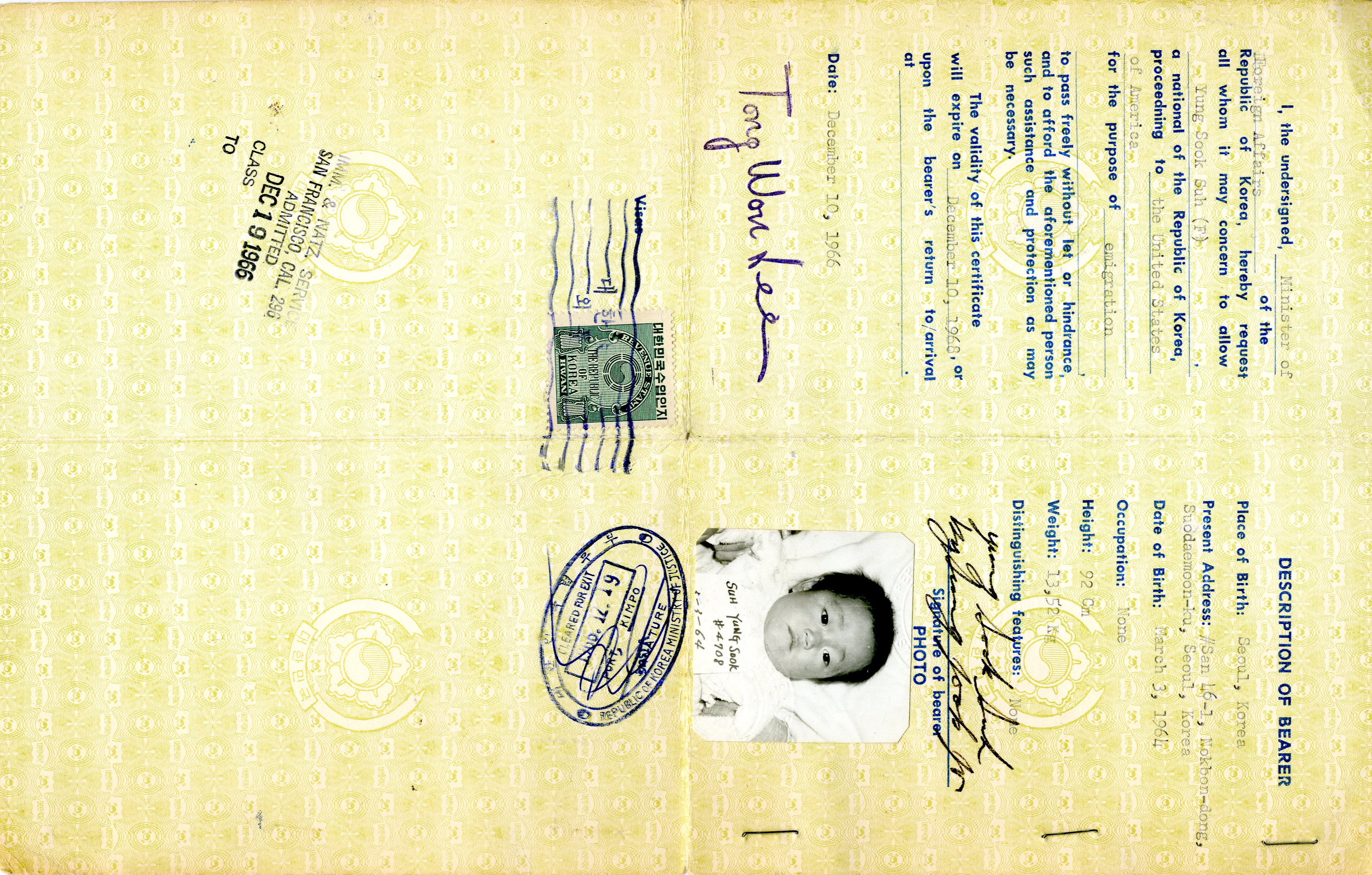
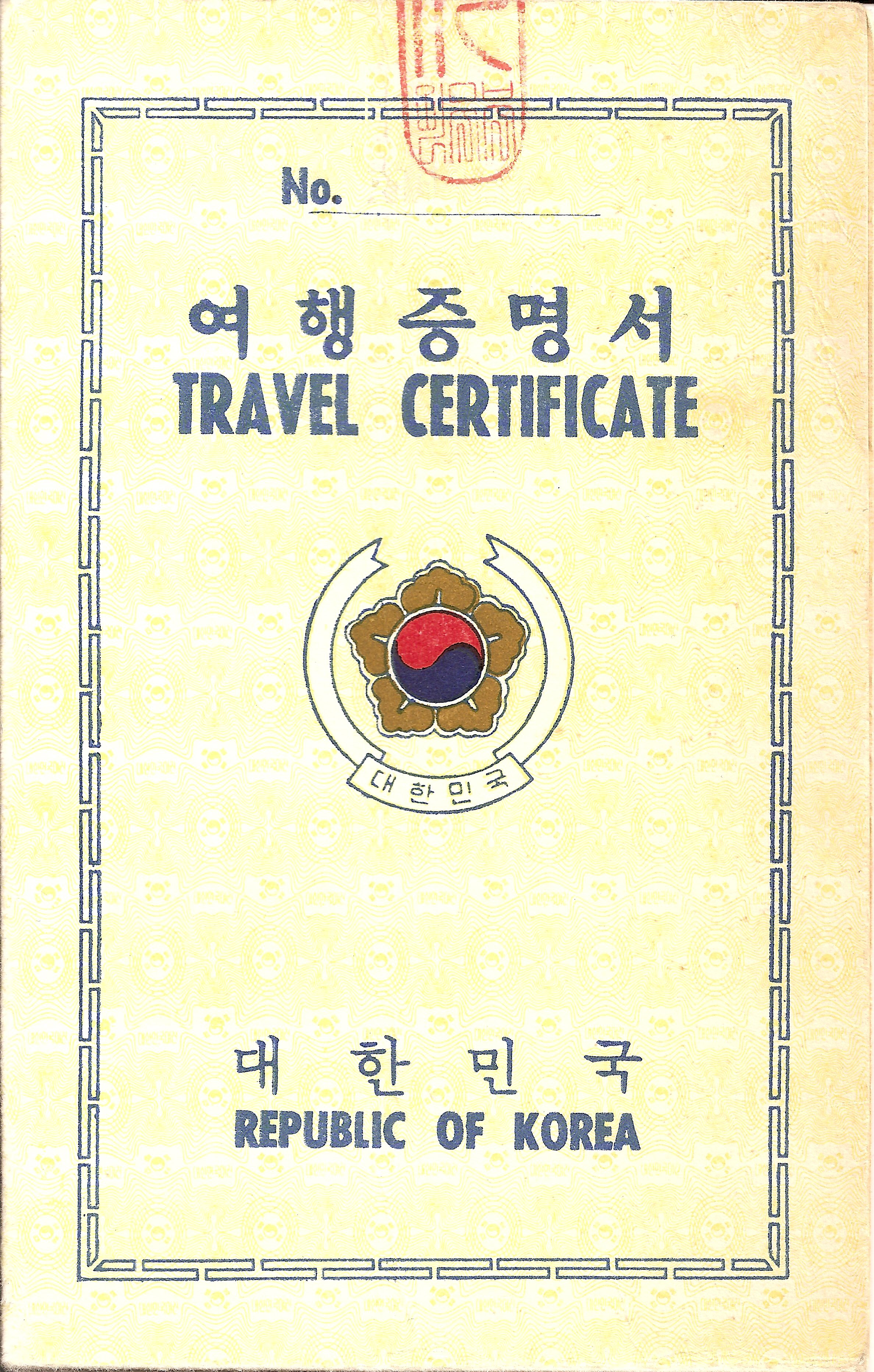
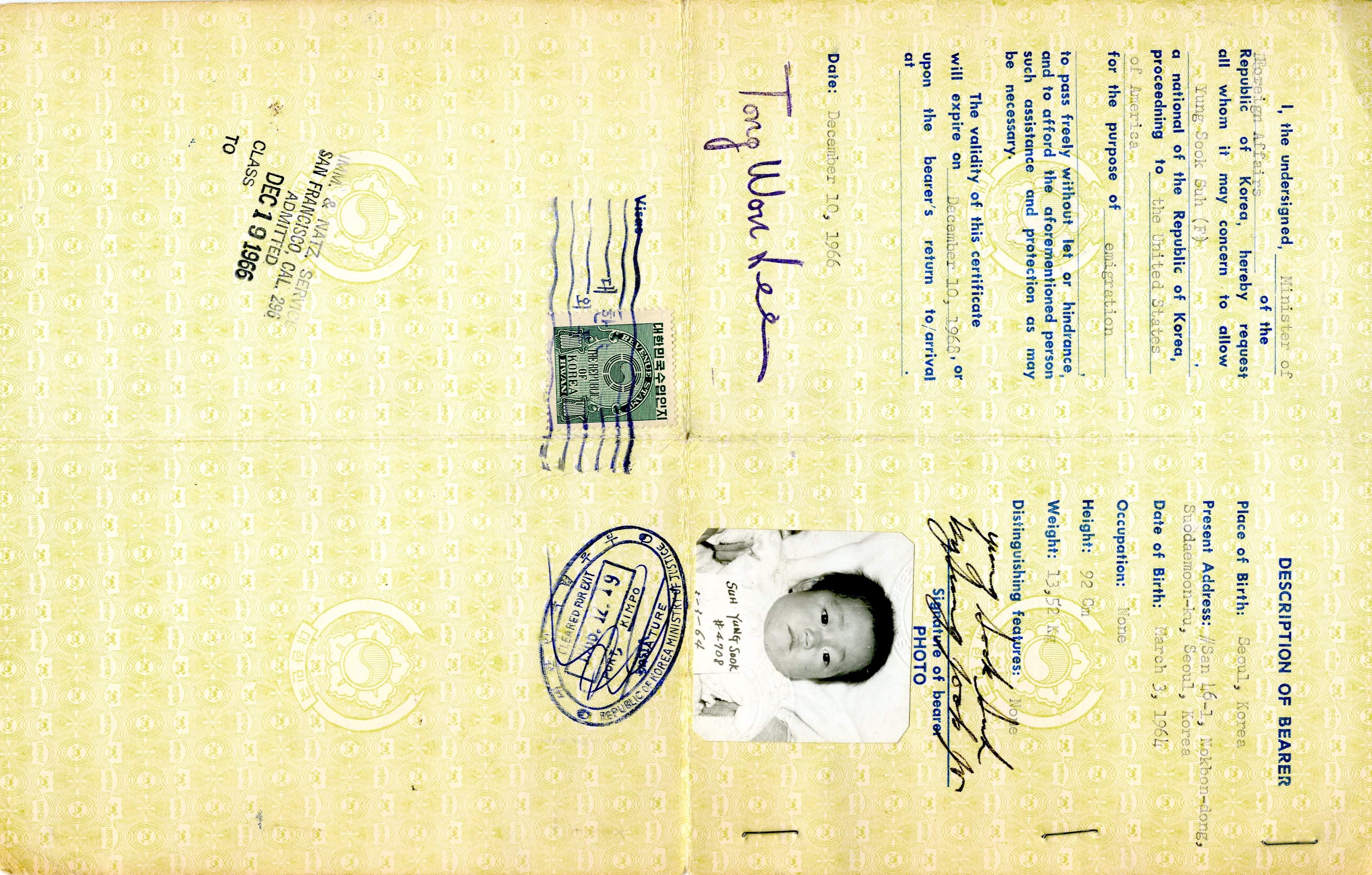
I gave her my one-way travel certificate out of Korea and will be sending her the rest of my “original” documents. I had found that these were already in my possesion, unknown to me, after I had sent away for my “child records” from Holt International.
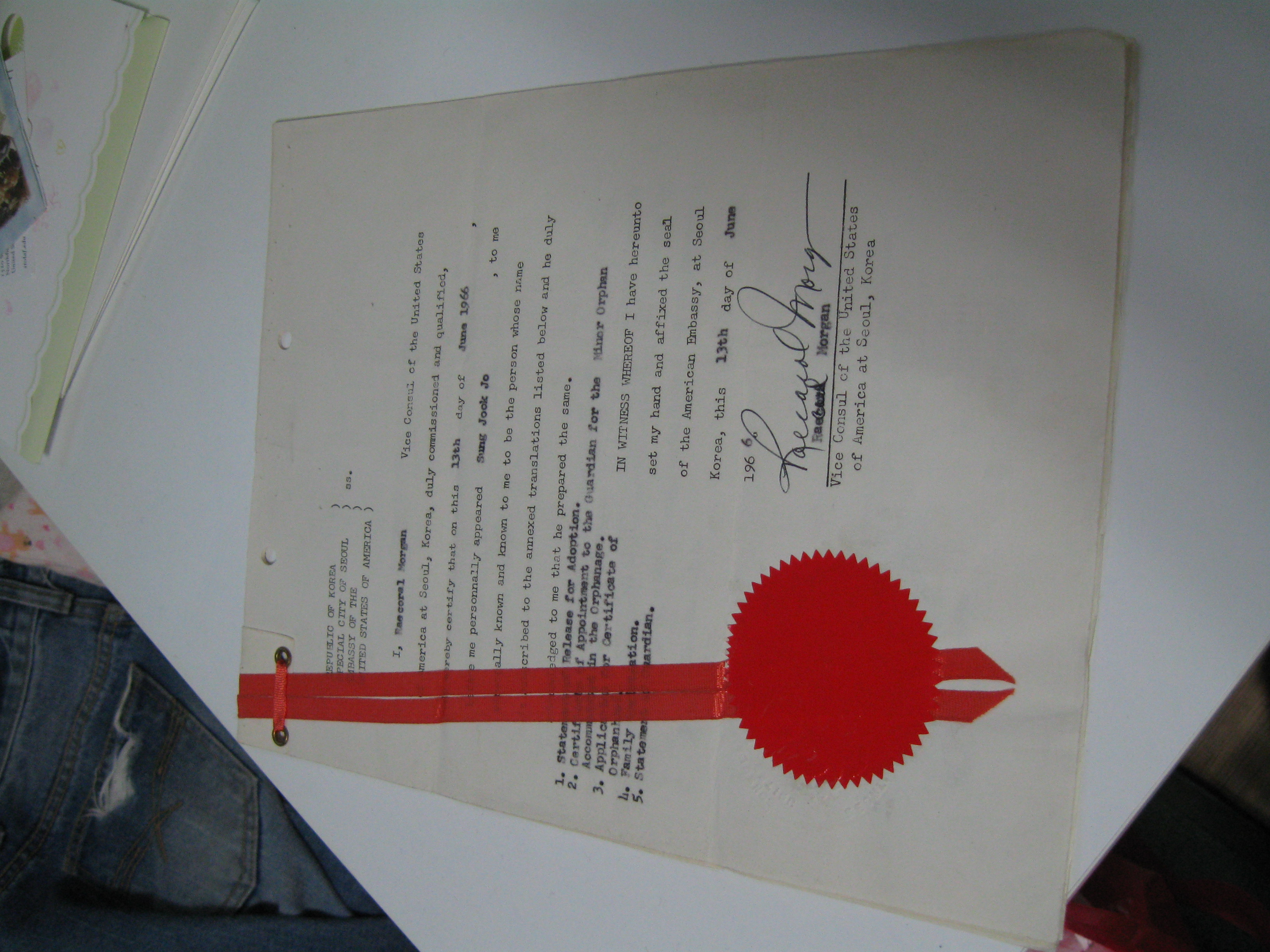
They are mostly on onion skin and have the official seal and red ribbon and are ancient like me, so a nice artifact to give to the museum. I took one last look at them just now and will send them off, since they aren’t doing me any good, they might as well be in a museum. Because most Koreans have never seen these documents.
Like Jane is writing about right now, Koreans can’t fathom not being referred to in relation to some family. And our orphan hojuks list us as the head of our families, with no mother, no father, no siblings (liars!) and fabricated family seats. Mine says I am from Daegu, when Holt Korea had in their possession documentation that I came from the Wonju area. Just goes to show how inconvenient fact checking is and how irrelevant anything relating to our identity was and how there wasn’t even any attempt to be honest about it.
After Incheon was a dinner with TRACK members and then off to Koroot for an interview with film students from Sookmyung University. Then to the love motel and up early to go to the Seoul Training Center for Important Intangible Cultural Properties in Gangnam to try and find some real classes in Korean arts.
Well, that was pretty stressful, as I got out at the wrong exit and was late meeting the film students for more filming. And I didn’t have a phone so I couldn’t call for translation help and I went through three taxi drivers who didn’t have a clue where that place was, one of whom got screamed at by a bus driver who was unable to move without ripping my body apart as I explained where I wanted to go, and they almost got in a physical fight and the bus cut the taxi driver off later…nor could I explain to any of them that it was by a park and a post office. Finally, I drew a map and was able to get one driver there with incremental directions. When I motioned to turn right and said, oranjo, the old guy said right and then showed me he knew right and left in English and he was so pleased with himself. And I was so pleased we had made it to the center that I just BEAMED at him as I nodded that he was correct.
So the students were all confused as to why we were there. There wasn’t anything going on at the moment, and I explained that I was there to find out more about future classes. Me not being able to read the schedule and arriving when nothing was going on didn’t seem film worthy to them, and I tried to get them to film THAT and they were doubly confused. Because there was nobody at the desk, I figured the least they could do was film some of the difficulties we adoptees have, but you know – these kinds of things DON’T OCCUR TO KOREANS. That we have difficulties doing the simplest things, or that it’s of any note. (sigh)
All we could do is go upstairs to the exhibit room (which I never would have found without them there) and try and see if there was more information. It, fortunately, was attended. It turns out that the classes taught there were, unfortunately, for children. They thought this would be good for me since I can’t speak Korean. Well maybe…but the only thing childish about me is the little fit I wanted to have as I pouted that I want to learn something deeply and that I need adult classes. They also have classes for Korean teachers and a lecture series. The crappy thing is their website isn’t updated and the class lists are only for a month or two, so to find out about them remotely is next to impossible. And they are all in Korean and it was clear nobody was going to take the time to translate that for me when they had filming to do. The website told of an architectural repair course, teaching ancient building techniques and restoration techniques, but it didn’t seem to be offered. So then all we could do was walk around the room, which was enjoyable for me because the translator was delightfully willing to OFFER information instead of just waiting until I had a specific question about something. Young-a was the only Korean person who ever did that for me and it was a great loss when I snubbed her advances…
By the way, Important Intangible Cultural Properties, if you didn’t know,is the title bestowed on living national treasures. These are artists or craftspeople who are the repository of cultural knowledge that is endangered. I asked the student who was there as my interpreter how many of them existed, and she said, “oh loads!” (she’d lived abroad in the UK. Do they say loads in the UK?) Well, I checked on-line and there are actually only 354 of them. I think the idea of the intangible cast-off being taught a priceless Korean heritage art by an important intangible cultural property would be sooooooo poetic.
As you know, I’ve been searching (actually, for eons, but only renewing the search) for the past week for something non-adoption to do here in Korea. And the fare is pretty pathetic. The classes offered to foreigners are really superficial and not much more than finishing-off kits of “look what I did in Korea!” souvenirs. Give us a lot of money. Here’s a box someone else made. Cover it in paper, stain it, and you are a hanji paper artist. In two hours you will own some Korean culture. Congratulations on your new Korean skill…This is all that’s available to me as a non-native speaker. And this is the depth to which the ethnic Korean who’s been involuntarily exiled but who’d like to explore Korean culture more can go. Well b.s. to that. I want the intangible, damn it. I’ve got it in me: I’m detailed enough, perfectionist enough, embrace tedium enough, to learn a Korean fine art. Give me access, damn it! I’m also resourceful enough to think of tracking down intangible cultural properties and asking them to please take on a deaf mute student.
So the reason, dear students, that I drug you to this place is because I want to see what other arts exist besides straw, paper, and knots. It took awhile, but I think by the time we had walked through their exhibited works they understood where I was coming from. The students were sweet. I hope they walked away with a different idea about what being an adoptee means. We surveyed embroidery that looked like painted brush strokes. And silver inlay that looked like it took years to finish. And some amazing painting techniques on ceramics, and then — then I spotted THE SHOES.
Little finely wrought shoes of silk and kid leather. I quickly asked if it said which intangible cultural property had done them, and vowed to look on-line (the website had their names and phone numbers listed) so I could contact the artist. Later, when I got home, I looked up this artist and he wasn’t on their contact list! So I’ll have to call or email them to try and get it. Then I found out more information and he was the only one in Korea who can make these shoes. (yayy! maybe then he will take me on!) And then still later I read that his son will apprentice with him and this legacy will continue, so I’m afraid neither of them will want anything to do with me now. :(
Oh well. I will try…
I went to try and show you some photos of the royal shoes, but couldn’t find any images. Lots of wedding or hanbok ones – but they look very different. And I did find some small images, but didn’t save them and it would take hours to find them again.
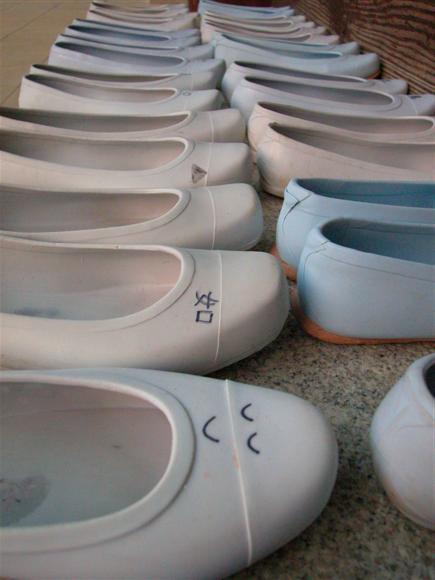
But anyway, here are what the modern ones look like: molded in one piece out of plastic.
common plastic gomushin today, from http://urin79.com/zb/759154 - they usually come in primary colors (yuck)
I actually hate these things – they’re too wide, too rounded, made like “jellies” and probably good for a blister.
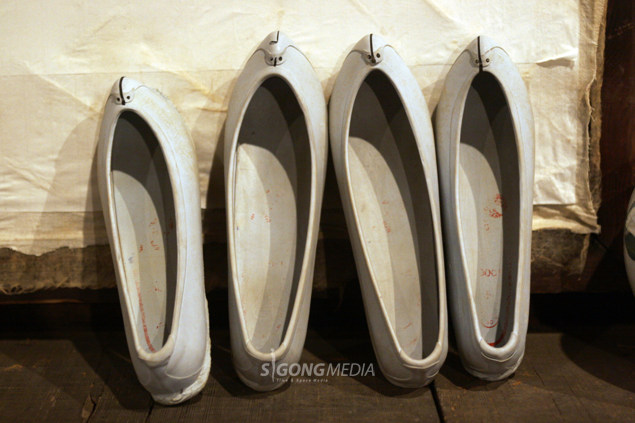
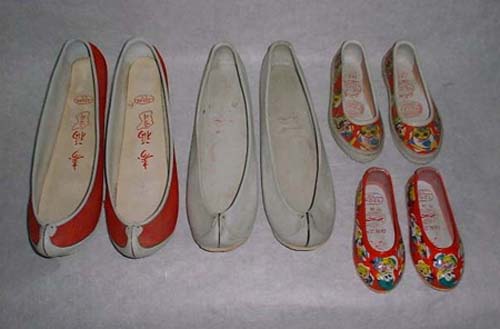
Rubber shoes from the past
But I love the old rubber shoes.
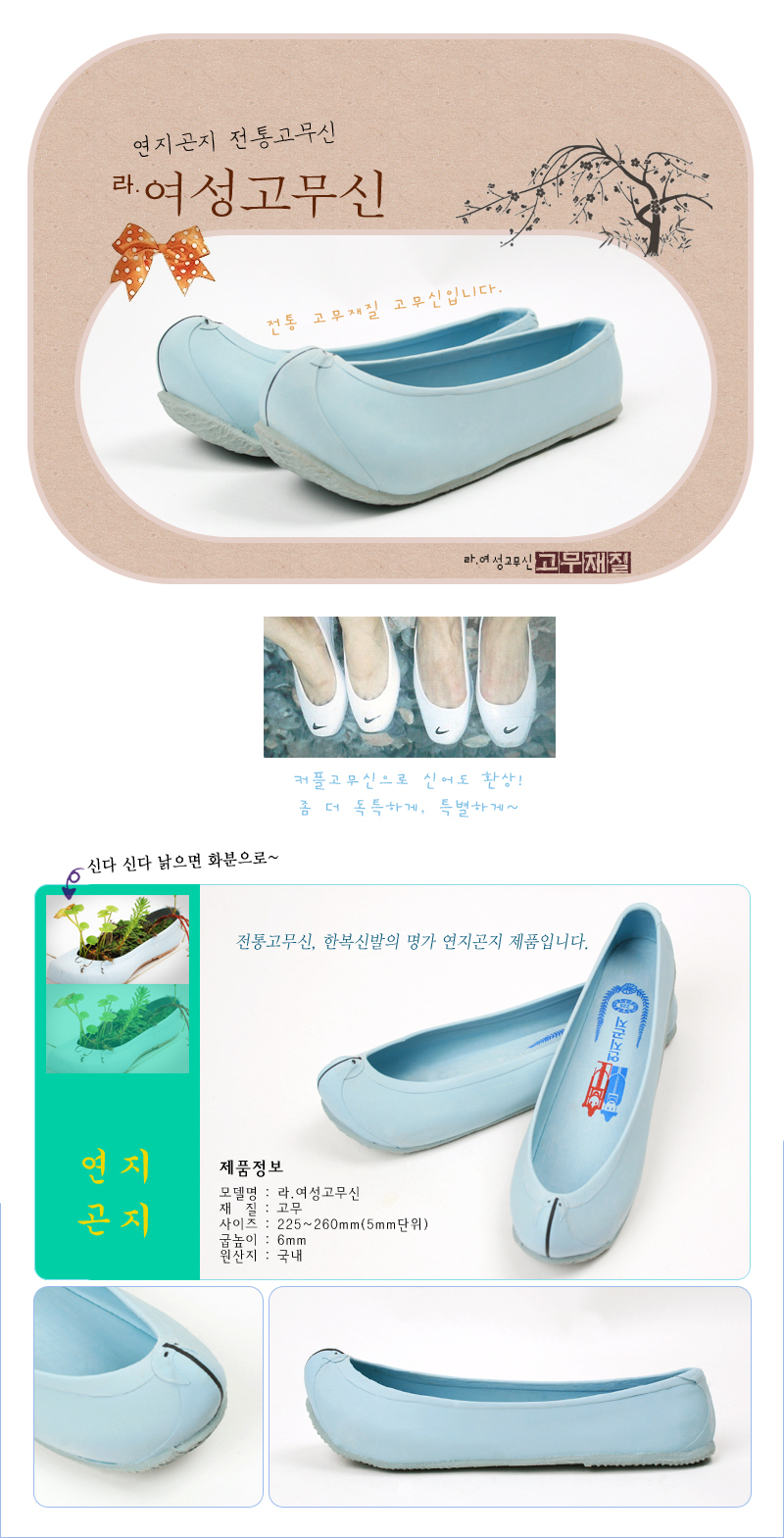
But look! You can order them on Gmarket! And I totally plan to buy some of these rubber shoes that I finally found. Will I wear them? My students would probably laugh at me, as the only people wearing them are old people. It’s really weird how I love raimie fabric and traditional all-natural fabrics, but I also don’t want to be seen as the weird Korean pretender. There is definitely a small group of Koreans (about my age) who wear all-natural hanbok-inspired clothing who have a matured hippie zen kind of thing going on, but it’s more authentic for them to be looking roots than me.
So I can’t really go there without being some cultural tourist – EVEN though the fabric is cooler and the production supports the continuation of the craft and most of the traditional functional arts just make environmental sense.
Oh yeah, I almost forgot nobody can afford to look like that anyway. Supporting hand crafts is super expensive.
Anyway, you might not find that exciting, but I did. The rubber shoes are not only more refined and graceful, but also much thinner and more flexible than the plastic shoes available now. Wearing them you are every bit as nimble as wearing keds…
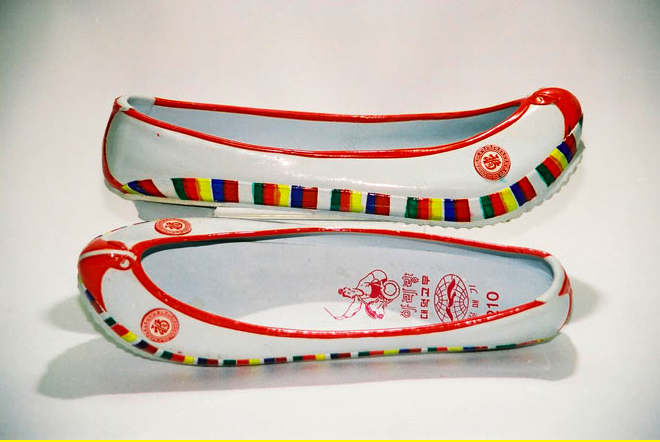
Plus they had design and color added on the children’s shoes, and they could be patched. I had some blue ones as a kid, but they weren’t sent with me from Korea, as Holt asked all the parents to send Western clothing in advance of our plane trip. I seem to remember some fair and there actually being a Korean table and me picking them out…
I imagine a lot of poor kids with dirty bodies and dirty socks were pretty smelly wearing these. I know cleanliness was superficial at the orphanages and from talking to a Korean (not an orphan, just poor) my age about cleanliness back in the day, he said that the children in his home had to take baths last in line, after the adults, using the same water, and that it was such a chore to make the kids take a bath that it didn’t happen very often. Plus they were kids playing outside, so they were always dirty and stinky.
And I just discovered there’s another shoe museum besides the Bata shoe museum in Toronto, (that I had the privilege of checking out – I’ve always wanted to make shoes. I would love to go to the Cord Wainers school in the U.K.) in Belgium, called Shoes or no shoes
So that’s one idea. Though I realize to actually be an apprentice I’d have to live with the guy and be his slave and unless I find a rich husband or win the Korean lottery (which I don’t know how it works and wouldn’t even know if I won) then classes aren’t really an option. But maybe the guy will have pity on me. So I need to find a translator so I can hand him my deaf-mute plea to take me on as a bumbling student.
Plan B is to take a foreigner cooking class, which are either really super expensive or almost non-exist ent. The unwed moms are teaching some of these but they are not consistently offered (yet) and I want to meet people outside adoption land. Actually, I don’t really want to cook right now, and Mangchi does a fine job demonstrating on-line, but it would be nice to know at some later date and would be a good social activity. Plan C is volunteering somewhere.
And the plan at the moment is to get some sleep…
ADDED:
A little more snooping with some google translator and I found this photo:
See how colorful they were? And the edges are so soft and round – not with that sharp edge like the plastic ones…
There are many Korean blogs and people writing little essays using the rubber shoes as a vehicle for poetry and reminiscence. One essay was about the history of shoes and what they tell about the wearer. Reminds me of the Great Gatsby, how he knew someone’s fortunes had changed by looking at their shoes. I believe (google translate can only take meaning so far) the author was chastising the elder Koreans for their adoption of western wear and ridiculing them because no matter what they did, their rubber shoes gave them away. It sounded like they appeared around 1922 after the failed Bolshevik revolution for some reason. And they were a welcome addition because Korean people could not afford leather shoes and the straw were often inadequate. And they started their decline around 1960, when the city folk could now afford western shoes and the rubber shoes gave you away as being a country bumpkin.
Another blogger wrote wistfully about a day when simple flat shoes were thought to be beautiful and how now women only want to wear 길힐 (kill heels) to impress men.
I could spend days on this kind of thing, which I have, which I shouldn’t as I’ve got work looming over my head…
Oh yeah, and after the cultural center I went to Hongdae to LUSH and purchased tea tree powder for those times you wear shoes barefoot. $$$ Ate at a Japanese noodle restaurant, then met an adoptive mom of two in Insadong, who actually helped find the family of one of her adopted children and is working on finding the family of the other child. He and his half brother were goofing with each other the entire time and the mom quipped how amazingly alike they were in personality. And his sister by adoption said, “yeah. it’s scarey!” (how much alike they are) I made them stop at Red Mango and order binsu, which is fruit and ice cream over shaved ice. Usually with red beans.
Then I hobbled back home and purchased two FULL SIZE towels at Daiso for 3 bucks each. (There’s a Daiso right at my train station and I can’t leave without getting something) I have no idea why the Daiso as a Japanese company only markets itself as Daiso.co.kr here in Korea and almost all their items say Made in Korea on them. Anti-Japanese sentiment seems to be more about claiming and or glory, so getting territorial about two dollar items seems incredibly petty. And if it’s really a Japanese based company, does it even matter if it’s masked to be Korean? Koreans are still buying and the money’s still going to Japan…Anyway, It’s so great to have a big towel, even if it is baby terry and not very thirsty.
I know I looked crazy laden down with messenger bag, shopping bags, and a lamp the museum had given me. I really should give in to my inner ajumma and carry that cart with me wherever I go. But if I were a hardcore ajumma, I would just push around a baby stroller.
Outside my window this morning, I saw what appeared to be one dragonfly hitching a ride on another dragonfly. I figured this was a pair mating, and dismissed it but later I saw this phenomenon again and again and again. It seems they all mate on the same day.
I went and ate at a nearby place that had two pairs of the gossamer-winged insects shamelessly copulating for everyone and ordered dubu kimchi. (tofu with cooked pork & kimchi) It’s usually quite mild, but this one is hotter than hell, the woman adds so many hot peppers to it. I can never finish it, it’s too much pepper for one sitting. This time other single guys individually came in and ordered their drinks and anju (drinking appetizers) soju with fried potato cake and maekju with dried squid. Sometimes I am blown away by how NOT Korean some Koreans look.
The proprietress was THE most inefficient person on the planet, (for example, getting a man his beer took her three trips – one for the beer, one for the glass, and one for the bottle-opener) she had very little prepped and even had to run to the store to buy tofu, but everyone seemed to have nowhere to go and were in no hurry. I was sad that ordering a cola made her forget to give me mul kimchi like everyone else got, which she ladled out of what seemed to be a refrigerated cooler just for mul kimchi. She seemed to have a brisk take-out order for something she made on an actual short-order-cook griddle. So it took an eternity to wait for a nice moment to ask her to wrap the food to go. Koreans would have yelled for her attention, but I still don’t feel right about doing that. I’ve been here a year and a half and I can’t remember how to say please wrap this to go in Korean. Poja?
When I got home, some boys in my building were outside with butterfly nets, catching dragonflies and saving them in a plastic box, giggling.
I wish I could join them, but I’d spoil their fun.
I think about the boy I love and realize he’s the only person I’ve never wanted to gain anything from. Stupid me, I think I am the tree, of the giving tree, and he is the boy. I fret about how i told him to stop breaking my heart, worried I’ll never hear from him again. Please never disappear.
Anyway, that was my day. Somehow I managed to get nothing accomplished again.



 Hello Korea !